Two ways to improve your IELTS Listening score
One is fast, one is reliable, and most students need both. Asiya Miart on working out which one is actually costing you marks.
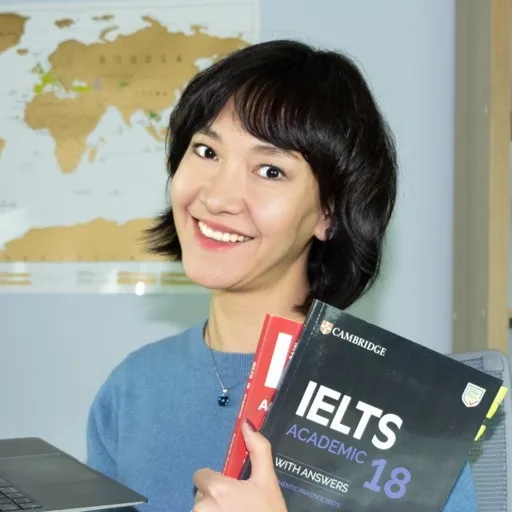
Asiya Miart
Founder of FasTrack IELTS
If you want to improve your IELTS Listening score, there are two things you need to work on.
The first is your English. If you can understand spoken English more easily, you will naturally get more answers right.
The second is your IELTS technique: knowing how the test works, how to approach different questions and how to avoid losing marks unnecessarily.
Your English usually takes longer to improve. IELTS technique can improve much faster. So if your exam is only a few weeks away, technique can make a real difference. If you have more time, you should work on both.
I have been teaching IELTS since 2017, and I still take the test myself from time to time to see how it is changing. One thing I have noticed is that students often assume every wrong answer means their listening is not good enough. That isn't always true.
Sometimes they understood the recording perfectly well. They simply lost the mark because of the way they approached the question.
First, find out why you are losing marks
IELTS Listening is the same for Academic and General Training. There are 40 questions, and you hear each recording only once.
As a rough guide, you normally need around 23 correct answers for Band 6, 30 for Band 7 and 35 for Band 8. The exact conversion can vary slightly from one test to another.
This means the difference between Band 6 and Band 7 can be just seven questions.
Before doing lots of extra practice, I recommend finding out why you are getting questions wrong.
Take one of the most recent official Cambridge IELTS Listening tests and complete it under test conditions. Then check your answers.
But don't stop there.
Open the transcript and go back to every question you got wrong. Find the relevant part of the recording and ask yourself what happened.
Usually, the problem falls into one of two areas.
You understood the English, but still missed the answer.
Perhaps you lost your place. You were concentrating on the previous question when the next answer appeared. You chose an option too early and missed the speaker correcting themselves. Or you misunderstood what the question was asking.
These are mainly test-technique problems, and they can often be fixed quite quickly.
You couldn't understand the English well enough.
Perhaps the transcript looks completely clear when you read it, but you couldn't recognise the same words when you heard them. Or there was an important word you didn't know. You may also have understood the answer but spelled it incorrectly.
These problems tell you that you need to work more on your listening, vocabulary, pronunciation or spelling.
Most students will have a mixture of both. The important thing is to know which one is costing you more marks.
How to stop losing marks because of technique
Once you understand how IELTS Listening is organised, the test becomes much easier to follow.
Remember that the questions follow the recording
The questions come in the same order as the information you hear.
If you are answering Questions 15 and 16, you know the answer to Question 15 will come before the answer to Question 16.
Use that structure to keep your place.
This is particularly important when you have a lot of information on the screen, for example in matching or map questions. Don't keep jumping around looking for something familiar. Follow the recording and move through the questions in order.
For a map, orient yourself before the recording starts. Find the starting point and look at the numbered locations you need to identify.
Use your reading time properly
The time before the recording starts is valuable.
Don't just read every question from beginning to end. Look for the information that will help you recognise the answer.
For a gap, ask yourself what type of word is missing. A number? A place? A noun? An adjective?
For multiple choice, look at the difference between the options. If three answers are almost identical, you need to know exactly what distinguishes them before the speaker starts talking.
And if you have finished checking one set of questions and still have time, start looking ahead. Preparing for the next questions is often more useful than repeatedly checking answers you can no longer hear.
Listen for meaning, not the exact words in the question
IELTS regularly paraphrases information.
If the question says a lecture was postponed, the recording might say they had to put the talk off.
So waiting to hear exactly the same word that appears in the question is a mistake.
You also need to listen to the whole idea before choosing an answer. In multiple-choice and matching questions, speakers may discuss several possibilities before deciding which one they actually prefer.
The important information is not always the first option you hear. Listen for the speaker's final meaning.
Learn how each type of question works
Official IELTS materials include several different question types. For teaching purposes, I find it useful to group most of them into four main families:
- completing gaps in notes, forms, tables, sentences or summaries
- multiple choice
- maps, plans and diagrams
- matching
There are also short-answer questions and variations within these groups.
You don't need to master everything at the same time. Practise one type, understand the common problems, and then move on.
Many students find multiple choice particularly difficult because they have to read, listen and compare several options at once. If that is where you are losing most of your marks, spend more time on it.
Protect the easy marks
Some Listening marks are lost for very simple reasons.
Always check the word limit. If the instruction says NO MORE THAN TWO WORDS, three words will be marked wrong.
After filling a gap, read the completed sentence and check that it makes grammatical sense.
Check your spelling too. If the word is spelled incorrectly, you can lose the mark even if you heard the right answer.
And answer every question. There is no penalty for a wrong answer, so leaving a blank gives you no advantage.
How to improve your actual listening
Test technique can help quickly, but it cannot replace good listening skills.
If you struggle to follow the recording itself, you need regular contact with spoken English. The good news is that you don't need to spend every evening completing full IELTS tests.
In fact, there are better ways to improve your listening.
Try the listen-read-listen method
Choose a short piece of audio with a transcript. Two to five minutes is enough.
Listen once without reading and see how much you can understand.
Then listen again while reading the transcript. Pay attention to the places where what you hear seems different from what you see on the page. Replay those sections until you can hear the words clearly.
Finally, close the transcript and listen again.
You will normally understand much more on the third listen.
This exercise is useful because it shows you exactly what your ears are missing. Often, the problem isn't vocabulary at all. You already know the words when you see them written down; you simply don't recognise them quickly enough in natural speech.
Learn how words change in natural speech
English does not sound the same when people speak naturally as it does when words are pronounced one by one.
Words are linked together. Sounds may become weaker or disappear. Common combinations such as should have may be pronounced as should've.
If you only know how a word looks on the page, you may not recognise it when a speaker says it quickly.
Learning some basic features of connected speech can therefore make listening noticeably easier.
Listen to different accents
IELTS uses a range of accents, including British, Australian, New Zealand and North American English.
You don't need to become an expert in every accent. You simply need enough exposure that an unfamiliar accent does not distract you from the meaning.
Listen to a mixture and pay extra attention to the accents you personally find harder to understand.
Use the listening time you already have
You may not have an extra hour every day to study IELTS, but you probably have small periods when you can listen to English.
It could be during your commute, while cooking, walking or doing something around the house.
Use some of that time for podcasts, interviews, videos or other natural spoken English. Choose material that is challenging enough to stretch you but not so difficult that you understand almost nothing.
This kind of listening is not a replacement for focused practice with a transcript. But it gives your ears much more regular exposure to English without adding another long study session to your day.
So which should you work on first?
That depends on what is actually costing you marks.
If your exam is close and you understand most of the recordings but keep making mistakes with the questions, focus heavily on IELTS technique. Those are usually the marks you can recover fastest.
If you regularly read the transcript after a test and think, I know all these words, so why couldn't I hear them?, spend more time on focused listening and pronunciation.
And if your exam is still several months away, do both.
Build your listening skills consistently while learning how IELTS questions work. Then, as your test gets closer, do more practice under exam conditions.
The aim is not to learn tricks that somehow beat the IELTS test.
It is much simpler than that: improve your ability to understand spoken English, and make sure your test technique allows you to turn that understanding into correct answers.
Those two things together are what will give you your best Listening score.
Start listening
The daily listening half of the advice above is the part Reelang is for. Real speech in short clips, graded by how hard it is to follow, with transcripts. No quiz and no signup.
The IELTS listening pack Asiya curated
Short clips of real English, grouped by band, level and speed, with transcripts you can read along to.
Listening packs for other exams
TOEFL, Goethe, DELF, NT2 and more. Same idea: real speech, graded, in short pieces you can finish.
What teachers tell their students to watch
Language teachers name the channels and creators they actually recommend, per language.